
This week’s blog post is a book review of The Coroner’s Silence: Death Records and the Hidden Victims of Police Violence, by Terence Keel. First, some background.
Investigating deaths in custody in the U.S.
Deaths in custody are among the most difficult cases for a coroner or medical examiner. The challenges have mounted since George Floyd’s murder in 2020. The subsequent 2021 trial showed that pathologists’ autopsy reports are not objective truths, but subjective interpretations of facts.
Undercounting of deaths in custody
Law enforcement often ignores the 2014 law known as the Death in Custody Reporting Act (DCRA). As a consequence, we have no idea how many people die during arrests or in prison. In 2021 alone, federal data may have undercounted such deaths by at least 1,000.
In 2021, I investigated five deaths in custody. Each case was different, but there were commonalities. All five were men, none had yet been convicted, and the causes of death were natural (three) or suicide (two). According to Terence Keel’s book, The Coroner’s Silence, that pattern is typical of in-custody deaths in the United States.
The public scrutinizes and criticizes a coroner’s decisions about cause and manner of death in police-involved fatalities as never before. That’s as it should be. When someone is deprived of liberty, their health and welfare are the responsibility of the state, which needs to be held accountable.
What’s the book about?
In The Coroner’s Silence, Keel argues that coroners and medical examiners should be the ones to hold the state accountable for in-custody deaths. A professor at the University of California, Los Angeles, Keel bases his conclusions on research he and his students performed at the UCLA Biocritical Studies Lab. The research involved nearly one thousand autopsy reports about deaths in custody across the United States, with an emphasis on California.
Keel opines that “death investigators fail to expose the social and political conditions … ultimately responsible for people dying during arrest or while in jail.” He attributes this failure to several causes, including a focus on biological mechanisms of death and NAME’s “simply inadequate” guidelines regarding police-involved accidents like car crashes during high-speed chases.
A fresh take on elected coroners
Keel’s take on how the coroner system has lost much of its earlier clout within the justice system was accurate and refreshing. Medical examiners/forensic pathologists often disparage coroners as unqualified (“they’re usually not doctors”) or politically-motivated. Yes, states should elevated qualifications for coroners . But elected coroners are often in a better position to publicly express an independent opinion than medical examiners, who report to politicians. Whether coroners choose to do so is another matter.
I also appreciated Keel’s support of coroner inquests, particularly juried inquests. Inquests are a democratic and public approach to in-custody deaths that politicians might otherwise resolve behind closed doors.
“…Coroners were once powerful mediators of democratic accountability…”
Terence Keel
Autopsy reports for deaths in custody
Biology or sociology?
Keel argues that coroners should mention circumstances like social isolation or a prison’s violent history when writing about an in-custody death. Sociological factors undoubtedly contribute to who dies when in our society. I doubt, however, that coroners will adopt such a broad approach. It would be progress just to have coroners include the words “in-custody” or “police-involved” in official reports and particularly death certificates.
Describing injuries
I agree with Keel that descriptions of in-custody death investigations are often inadequate and incomplete. Unfortunately, that’s true not just for deaths-in-custody, but for all kinds of deaths and all kinds of death certifiers. On death certificates (which are different from autopsy reports), coroners often enter little or no information in the injury section for non-natural deaths. These CDC death certification instructions show examples of how to properly complete DCs for deaths involving injuries or poisoning.
Some weaknesses
Keel’s book is based largely on autopsy reports. Again, autopsy reports are not death certificates (DCs). As Keel details, autopsy reports are often inaccessible. But death certificates, which contribute to national statistics, are almost impossible to obtain unless you are next of kin.
I would have liked to see more positive examples of coroners calling in-custody deaths homicides or holding inquests on such deaths. Keel describes one such case: a Los Angeles inquest into a police-involved fatal shooting and the brave action of LA Coroner Dr. Jonathan Lucas. Defying the Sheriff’s “security hold,” Lucas released the autopsy report for Andres Guardado and called the death a homicide. At the time, Guardado’s family said “We would like to recognize the Los Angeles County Medical Examiner for doing the right thing by releasing the report and standing on the side of truth.”
Coroners and medical examiners don’t work in a vacuum. Local politicians, sheriffs, or district attorneys responsible for hiring or firing death investigators often apply pressure on those employees. Elected coroners may have more leeway, but displeased political operatives can find ways to force them out.
Full Disclosure
Terence Keel and Chester County
I knew Keel was writing a book about in-custody deaths, because he interviewed me for background information about Pennsylvania’s complex death investigation system. However, when the book was published (11/2025), I was surprised at the title and the emphasis on coroners.
I wondered how much the book title—The Coroner’s Silence had to do with Keel’s court battles to obtain autopsy reports from Pennsylvania coroners, including the Chester County Coroner. I was no longer coroner at the time of Keel’s Right-to-Know request, a court case that was eventually resolved in Keel’s favor. According to the current coroner, Keel did not pursue acquisition of the reports after winning the case. Perhaps he was deterred by Pennsylvania’s high state-mandated fees ($500 for the autopsy report alone) or perhaps he had completed the research for his book by the time the case concluded.
Who should read this book?
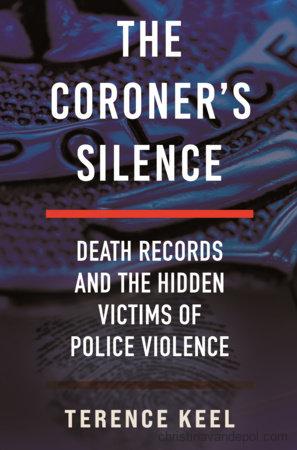
Coroners, medical examiners, law enforcement officers, homicide detectives, prison staff, those who report on violent death, and the voters who elect coroners would find the The Coroner’s Silence a fascinating read.
Learn more about Keel and his work in this Los Angeles Public Library interview.
Featured image by Markus Winkler on Unsplash