

When I did an online search for “what is kratom?” this past week, thousands of results popped up. That wasn’t the case in 2018, when I certified a young man’s cause of death as “acute mitragynine intoxication.” At the time the opioid epidemic was near its peak, so this was an unexpected toxicological finding. I’d never heard of mitragynine, which is popularly known as kratom. At the time, the American Chemical Society described it as an alkaloid produced by the southeast Asian tree Mitragyna speciosa.
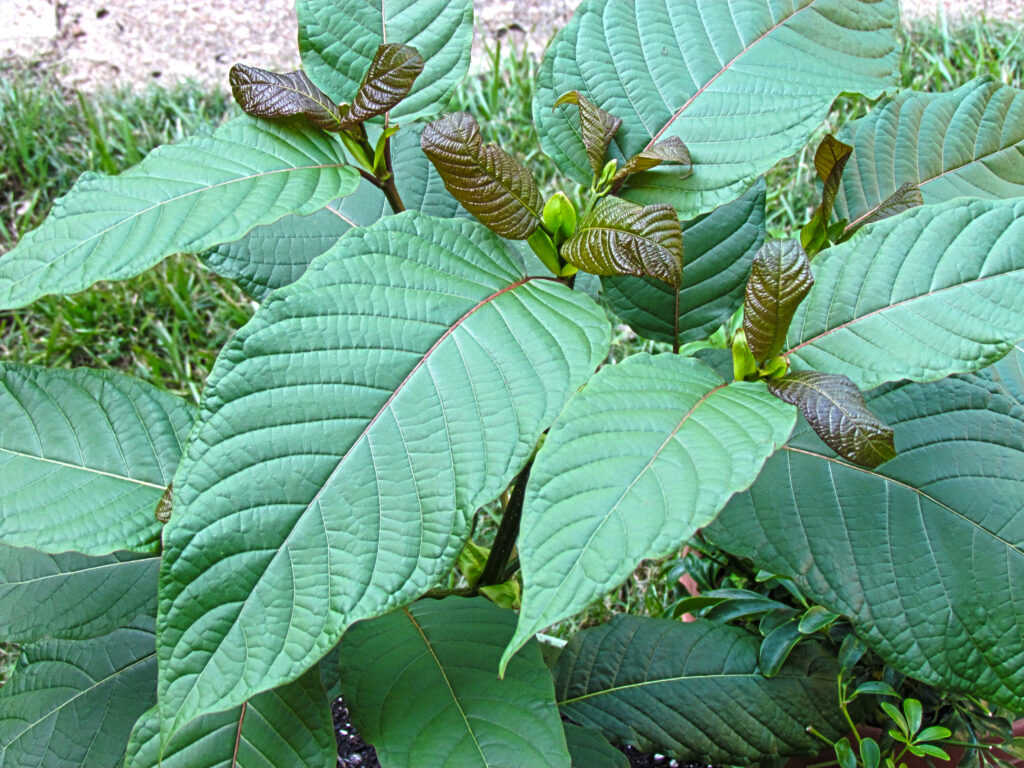
Alkaloids are naturally occurring molecules that contain nitrogen; most have effects on the central nervous system. Other plant-derived alkaloids include morphine, strychnine, and nicotine.
The leaves of M. speciosa contain dozens of alkaloids, the best known being mitragynine and 7-hydroxy-mitragynine (7-OH). Both are known agonists of the mu opioid receptors in the brain, the same receptors targeted by morphine, heroin, and fentanyl.
Kratom history at the federal level
For more than a decade, kratom has been on the radar of several federal agencies, including the National Institute for Drug Abuse (NIDA), the Food and Drug Administration (FDA), and the Drug Enforcement Administration (DEA).
- In 2016, the DEA proposed a temporary ban on kratom by listing it as a Schedule 1 drug (no approved medical use, high abuse potential). A backlash from consumers and business interests put pressure on Congress, and DEA pulled back.
- In 2018, NIDA’s website stated claims about kratom’s ability to control symptoms of withdrawal from opioids or alcohol were unfounded due to lack of scientific evidence.
- In 2018, Scott Gottlieb, FDA Director, after determining kratom contained multiple opioid drugs, warned consumers against kratom use.
- In 2025, HHS Secretary RFK Jr. and FDA Commissioner Dr. Marty Makary proposed making 7-hydroxymitragynine (not kratom) a Schedule 1 drug.
A trip to a smoke/vape shop
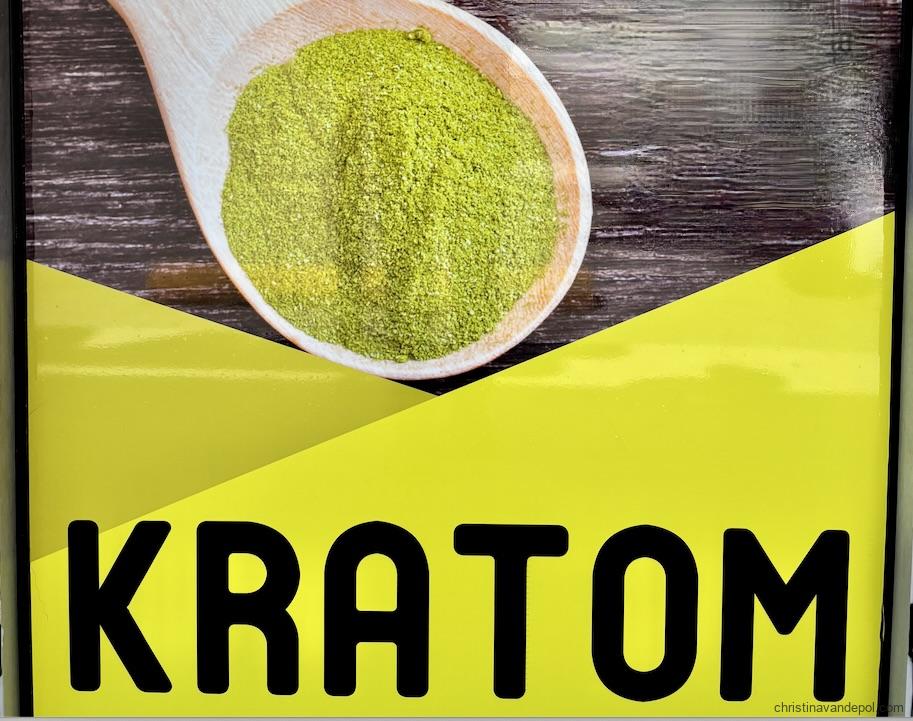
I stopped by a smoke shop in my neighborhood to ask the store owner about proposed kratom legislation in Pennsylvania. Are you concerned about limiting sales to those under 21? I asked the clerk. He had no idea what I was talking about, but was happy to show me their range of kratom products. I had my choice of plastic bags stuffed with capsules of green kratom powder, colorful boxes of 7-OH chewable tablets in exotic flavors, or 7-OH “shots.” No, I did not sample or buy any of them.
I was not allowed to take photographs inside the store, but the same or similar products are readily available online, so you can see them for yourself.
The cost isn’t cheap (around $35 for four tablets; “serving size ½ tablet,” for example). Still, it’s much less expensive than prescription or street-sourced opioids like oxycodone.
The kratom controversy in 2026
Like stimulants and hallucinogens, kratom use is on the upswing. It seems to be following the same path as other plant-derived drugs. Just as coca became cocaine, hemp became THC, and opium became heroin, botanical kratom is now often marketed in its 7-hydroxymitragynine (7-OH) form.
The more-potent-than morphine 7-OH has an ominous nickname: gas station heroin.
FDA’s take on kratom
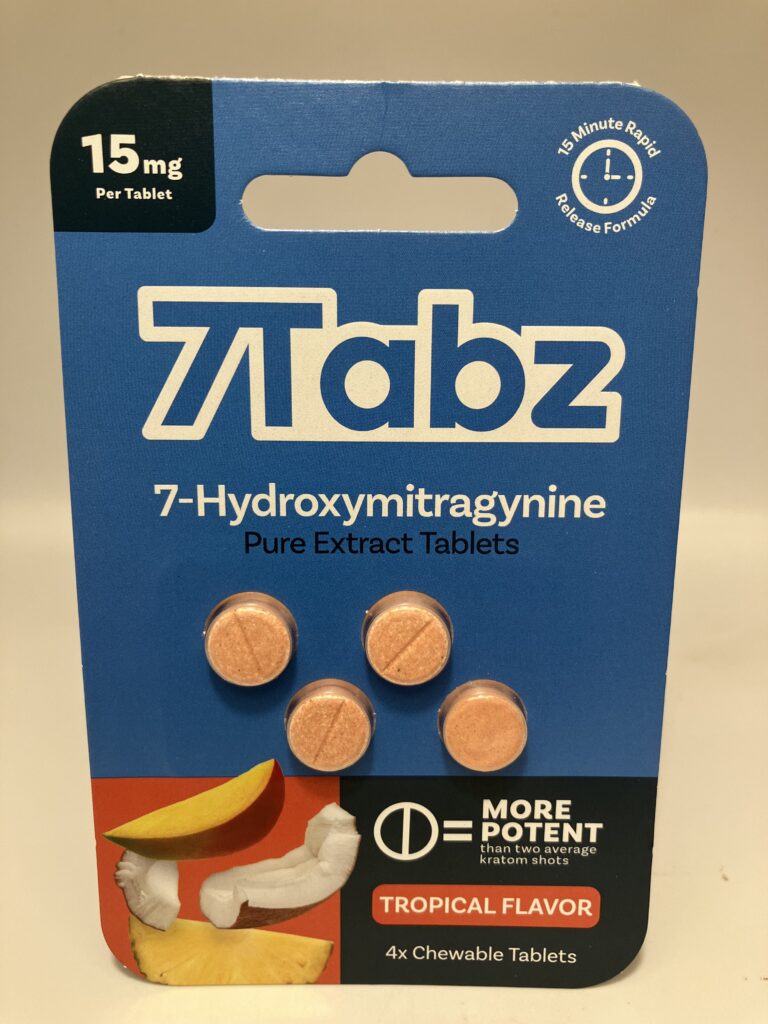
A recent FDA assessment concluded that 7-OH, which has high affinity for mu opioid receptors, has “a significant potential for abuse and associated harms.” Only about two percent of the alkaloid content of natural leaf kratom is 7-hydroxymitragynine. Some marketed products have much higher concentrations, leading to speculation about chemical synthesis. [Please follow the FDA link for more detailed information on the current research and clinical findings on 7-OH.]
Popular Uses
First person stories about kratom’s benefits—controlling opioid cravings, managing substance withdrawal, and treating pain—abound on pro-kratom sites and social media platforms. Users variously claim the product saved their lives, rendered them pain-free, or treated their depression. There’s a pronounced anti-pharmaceutical stance, with users considered the leaf product “natural” and therefore preferable to synthetic drugs.
Kratom Advocacy
The American Kratom Association, a nonprofit 501c(4) lobbying organization, characterizes the substance differently than FDA. According to its website, kratom is not a drug or an opiate, but a “safe herbal supplement” that happens to attach to the same receptors as opiates. As a 501c(4) organization, the AKA is not required to and does not name its contributors. The chairman of its three-person board is former Rep. Matt Salmon (R-AZ), who opposed DEA’s 2016 ban on kratom while serving in Congress.
Legal status of kratom products in flux
At the national level, the impasse between those who would regulate kratom and those who would not continues.
At the same time, many local and state governmental bodies are enacting or considering regulations and bans concerning kratom, largely due to increasing safety concerns around 7-OH. Here are a few recent examples:
State of Kansas: 7-OH kratom-related substances now Schedule I
Rhode Island: 2017 ban on kratom overturned, but 7-OH still outlawed
Tennessee: Bill establishing criminal penalties passed House, pending in Senate. The Tennessee bill also requires coroners/medical examiners to test for mitragynine in multiple situations.
Pennsylvania: Bills regulating kratom under consideration in House & Senate
Panacea or peril?
In my opinion, kratom is both right now. Clearly we need credible clinical research that quantifies its efficacy, safety, and dosing for specific uses. But the botanical substance (with its many components) is not patentable, which means little or no commercial interest by pharmaceutical companies. Perhaps a non-profit or even the NIH will step up. At the very least, more quality control is needed.
Unregulated use of potent, possibly synthetic, concentrates like 7-OH is a real concern. We just don’t know how worried we should be. Tennessee’s proposed legislation includes a requirement for toxicological testing, which is the only way (outside of clinical trials) to get more information. Meanwhile, there’s nothing stopping coroners and medical examiners from making sure their toxicology lab is testing for mitragynine.
Note: I have no financial interest in kratom or kratom-derived products. This blog post is a sampling of different viewpoints and a brief look at the current regulatory environment around the substance.